




Copper bears ancient charm, doors hold timeless grace: Timeless texture & living beauty of copper doors
Doors are the eyes and brows of architecture, the prelude to the home boundary, and the most intuitive expression of living style. From the vermilion copper palace gates of ancient capitals and the gilded mountain gates of ancient temples to the entrance doors of contemporary villas and high-end residences, copper doors have spanned a thousand years, always standing at the pinnacle of high-end door categories. It has never been a mere entrance partition; rather, it is an artistic carrier that integrates metal texture, intangible cultural heritage craftsmanship, traditional culture, and security functions. With its warm and substantial metallic texture, it connects ancient and modern aesthetics, capturing the bearing and heritage of a household.
Tracing back a thousand years: Copper as a noble vessel, the door embodies its own character.
Copper is one of the earliest precious metals developed and utilized by mankind, inherently possessing a noble attribute. Since ancient times, Chinese civilization has bestowed copper with a supreme status. Bronze ritual vessels of the Shang and Zhou dynasties were used to guard the state, copper ornaments of the Han and Tang dynasties adorned palaces, and royal residences of the Ming and Qing dynasties often employed copper door and window components. In ancient folk tradition, there was a saying: "Copper door mansions, scholarly family lineage," and copper doors have been a symbol of power, wealth, and upright family tradition since antiquity.
Unlike the perishable nature of wooden doors, the cold rigidity of iron doors, and the thin and commonplace feel of aluminum alloy doors, the physical properties of copper are inherently suited for architectural facades. In ancient times, copper doors were mostly used in palaces, temples, and princely mansions. After enduring wind, frost, and sun, their texture remains intact and their color dignified. As time passes, the copper material naturally oxidizes to form a warm patina, possessing a vintage, weathered texture. Each copper door's oxidation pattern is unique, an exclusive imprint bestowed by time — a living beauty that cannot be replicated by other door materials. For thousands of years, copper doors have transcended the building material itself, settling into a symbol of Chinese door culture.
Quality triumphs over form: Robust performance builds the foundation of home confidence.
The choice of copper doors for high-end residences begins with aesthetics and remains loyal to quality. Compared to conventional entrance doors, solid copper doors and finely crafted imitation copper doors combine visual appeal with practicality, meeting multiple needs such as home security, climate resistance, and long-term use, with irreplaceable core advantages.
First, corrosion-resistant and durable, with a long lifespan. Copper has stable chemical properties, extremely strong resistance to oxidation, acids, alkalis, and salt spray. Even in coastal areas with high humidity, heavy rain, and sandstorms, it is not prone to rust, deformation, cracking, or aging. A solid copper door made of high-quality T2 red copper can have a service life of up to a hundred years under normal maintenance, fearless of seasonal weather, requiring no frequent replacement or repair, and its value retention far exceeds that of wooden or steel doors.
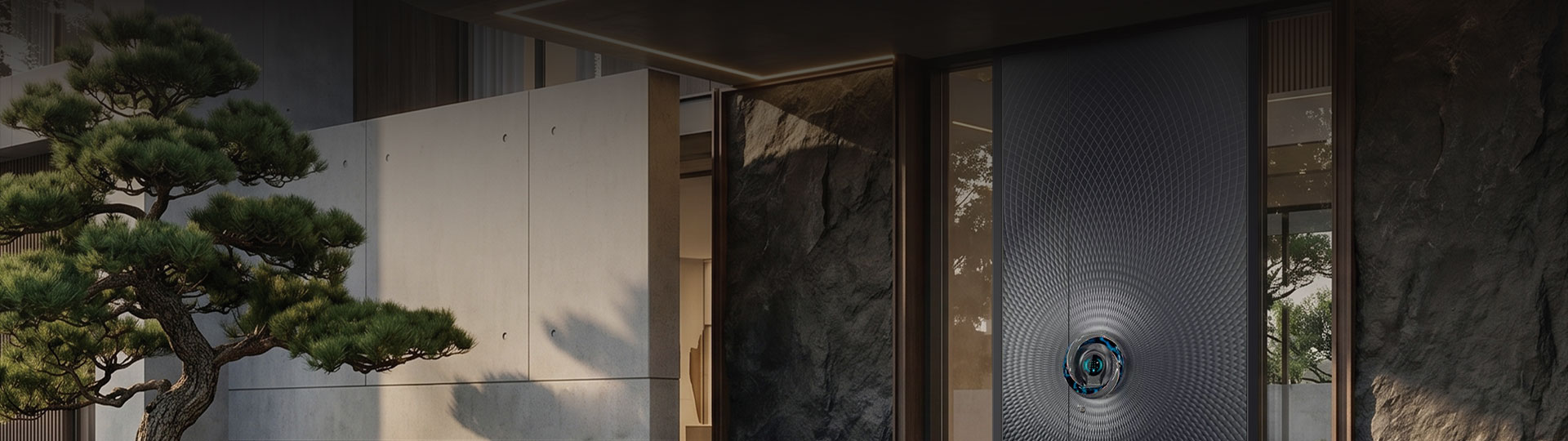
Second, excellent security for peace of mind at home. Copper material has high density and substantial hardness, with the door body formed in one piece. Combined with a thickened copper panel and reinforced keel structure, it offers outstanding resistance to prying and impact. Equipped with modern intelligent hardware, facial recognition, fingerprint password, and integrated security systems, it balances traditional heft with modern security technology, safeguarding courtyard privacy and home safety, suitable for villas, self-built houses, and large residences.
Third, soundproof and heat-insulating, comfortable and noise-reducing. The solid copper door body has excellent sealing, paired with custom sealing strips, effectively blocking outdoor noise and isolating hot and cold air currents. The thermal insulation and soundproofing effects are outstanding, optimizing the indoor living environment, suitable for various residential settings such as urban street-facing and suburban courtyard homes. At the same time, copper material is flame-retardant and fire-resistant, with a fire rating far exceeding that of ordinary wooden doors, further enhancing home safety.
Craftsmanship shapes myriad styles: Each carving and engraving suits a thousand styles.
Modern copper doors break away from the single traditional retro form, relying on dozens of exquisite techniques such as relief, openwork, wire drawing, antiquing, coloring, and distressing to unlock diverse aesthetic forms, perfectly fitting all categories of architectural decoration styles, including New Chinese, European retro, modern luxury, and minimalist national style, becoming the finishing touch of the building facade.
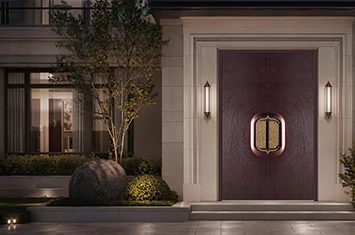
National-style copper doors are rooted in traditional cultural connotations. The door panels are carved with auspicious clouds intertwined with branches, plum blossoms, orchids, bamboo, chrysanthemums, dragons, phoenixes, auspicious beasts, and landscape patterns, with varying depths and staggered lines, simple and mellow lines. The color schemes often use antique copper, red copper, and matte bronze, aligning with the beautiful aspirations of inviting wealth, guarding the home, and ensuring family well-being in Chinese-style courtyards. In traditional culture, copper belongs to the metal element in the five elements, symbolizing the accumulation of wealth, attracting fortune, warding off evil, and protecting the residence. It fits the Chinese concept of settling down and praying for blessings, suitable for Chinese-style self-built houses and national-style garden mansions.
European-style copper doors exude a luxurious and grand aura. They often use three-dimensional relief, Roman ornamentation, and retro carving techniques, with champagne gold and bright gilt color schemes that are dignified and elegant. The door shape is tall and imposing, with clean and refined lines, suitable for detached villas, French-style houses, and luxury mansions, elevating the overall architectural style and highlighting the homeowner's aesthetic taste.
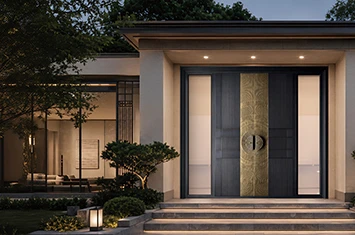
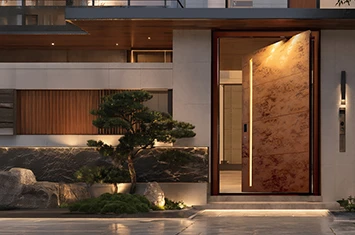
Minimalist modern copper doors simplify complexity and return to texture. Abandoning intricate carvings, they mainly feature solid-color matte copper surfaces, geometric cuts, and minimalist openwork designs, diminishing the sense of heaviness and highlighting the premium metal texture. They fit modern minimalist and luxury minimalist residences, understated yet sophisticated, appealing to current niche high-end home decoration aesthetics.
Blessings embedded: The Oriental residential symbolism hidden within the door leaves.
The Chinese, when building homes, have always emphasized feng shui and placed hopes upon them. The unique cultural symbolism of copper doors is the core reason many high-end homeowners favor them. Copper belongs to the metal element, warm and gathering qi, and has been regarded as an auspicious metal since ancient times. Folk tradition has long held that copper doors can secure the home, calm the spirit, block foul energy, and gather wealth.
Unlike other cold building materials, copper inherently possesses a warm aura, harmonizing the energy balance of the courtyard. The custom patterns on the door panels each carry profound meanings: auspicious clouds signify peace and smoothness, koi fish signify abundance year after year, landscapes signify a stable foundation, and minimalist plain copper doors signify purity, self-restraint, and a reserved family tradition. A copper door not only divides the interior and exterior space but also carries the beautiful aspirations of family safety, stable enterprise, and a thriving lineage — a romance and expectation unique to Oriental living.
Proper maintenance: Gentle care of copper's charm keeps it ever new.
Many people mistakenly think that copper door maintenance is cumbersome, but in fact, the maintenance of finely crafted copper doors is extremely simple. With low cost, you can maintain long-lasting beauty and extend the service life. Daily maintenance follows simple principles: for daily cleaning, use only a soft dry cotton cloth to wipe away floating dust on the door body; do not use strong acid or alkali cleaners, or sharp hard objects that could knock or scratch. Open and close the door gently, avoiding forceful pulling or banging, to protect the hinges and door lock hardware. In rainy seasons, promptly dry any water accumulation on the door surface, and have a professional sealing glaze treatment every 2-3 years to slow oxidation and color variation.
Distinguish the maintenance focus between solid copper doors and imitation copper doors: solid copper doors naturally oxidize, carrying an inherent retro beauty, so there is no need to deliberately avoid patina; if you prefer a brand-new look, you can periodically polish and seal. For imitation copper metal doors, the key is to protect the surface coating, preventing damage and corrosion, which is suitable for cost-effective home decoration choices.
Conclusion: A door of copper charm, quietly awaiting your return home.
Wooden doors conceal the hustle and bustle of life, while copper doors conceal character and backbone. A copper door is never a flashy decorative symbol, but a dwelling choice refined by time: it possesses the heft of metal, the intricacy of craftsmanship, the depth of culture, and the reassurance of home. Through the passage of years, it does not lose its texture or break its spirit. With a warm gilded light by day and a serene restraint by night, it stands at the entrance of the home, shutting out the clamor of the world, guarding the peace within. With one copper panel and one door, it carries a family's daily life and elegance.